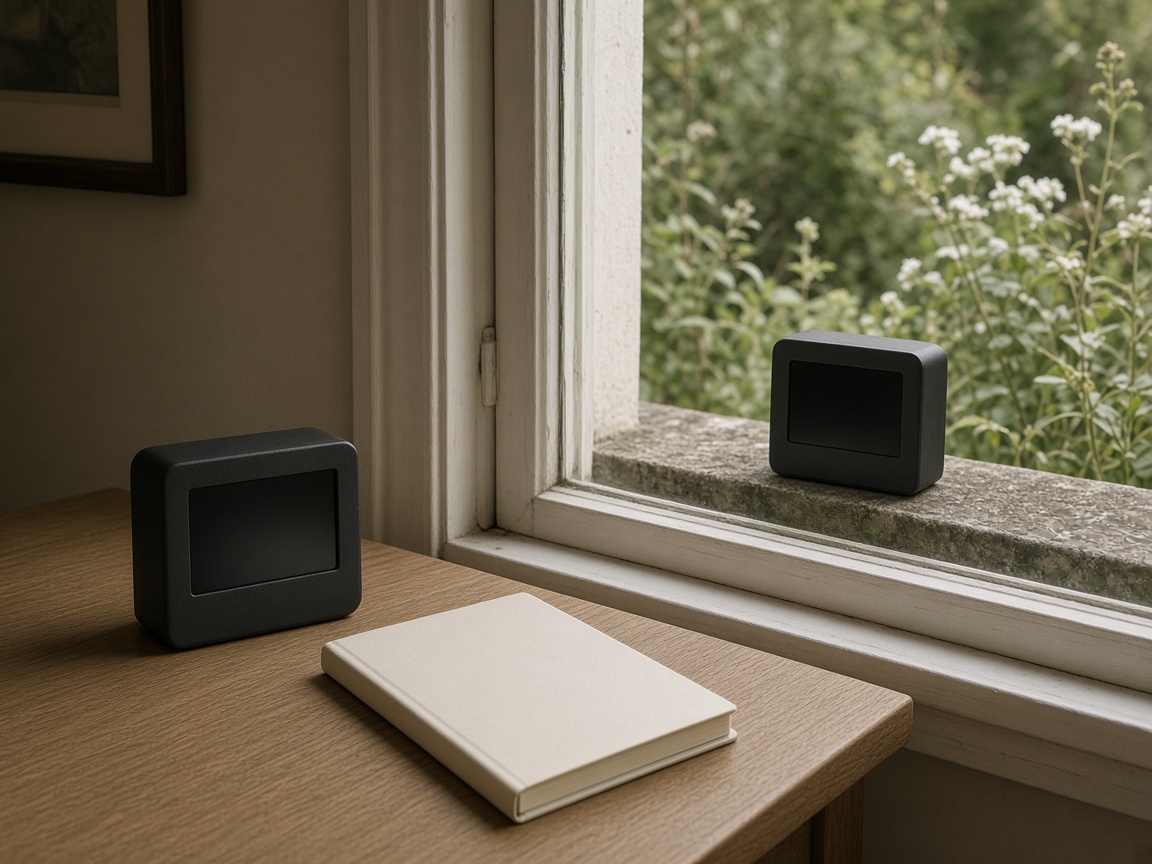
HSE’s workplace page asks for a portable NDIR monitor at head height, more than 50 cm from people, and away from doors, windows and supply vents. Jeff Geerling wrote that case convection raised temperature and humidity. RevK used an external DS18B20 for bedroom temperature because the board was warm. Without distances from a room this publication has checked, no page here can say a placement is correct.
The workplace distances
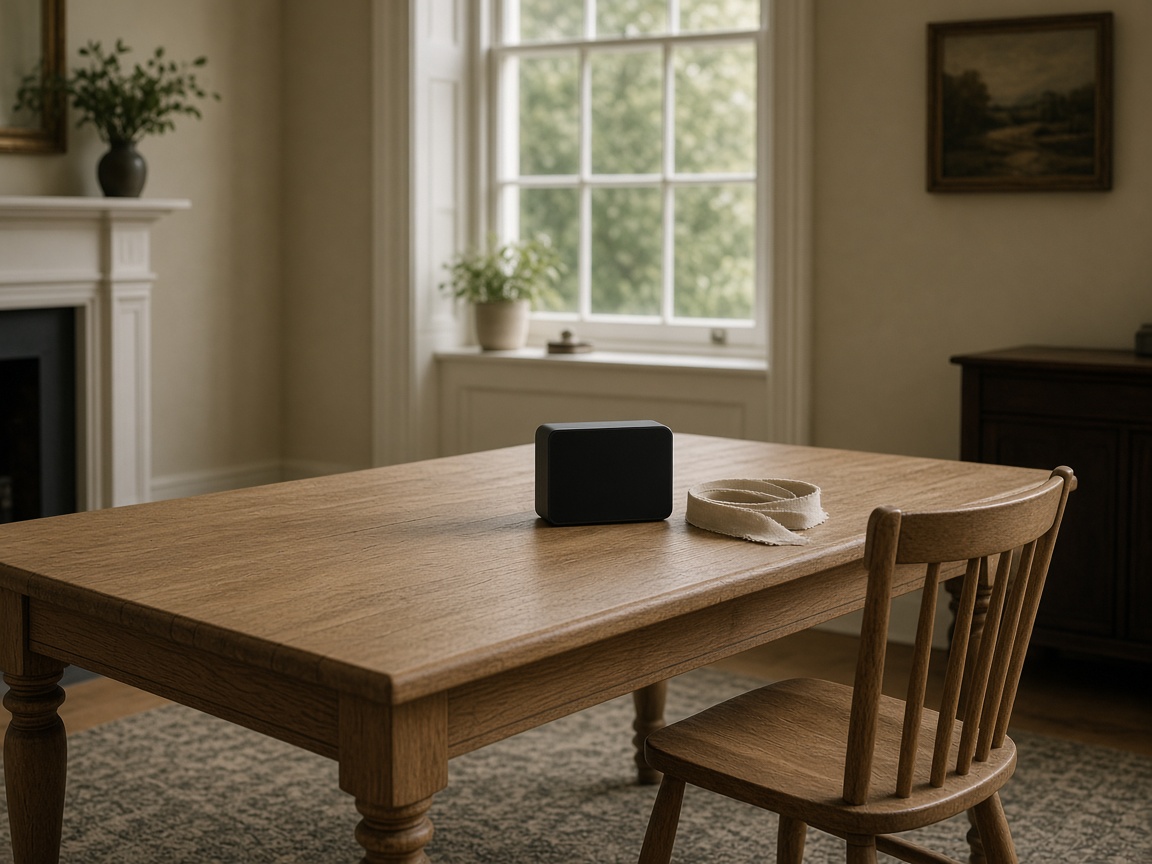
HSE writes that a carbon-dioxide monitor used to judge ventilation should sit at head height, more than 50 cm from people, and away from doors, windows and supply vents. A person breathing on the cell is not the room. A unit in the supply stream is not the occupied zone. Those sentences are workplace ventilation guidance. They are not a home health rule, and they are not a finding that any domestic placement on this site is correct. The still-life is explanatory. It is not a photograph of a room this publication has checked.
Building Bulletin 101 is the official school-building ventilation document. It is cited here only as the school-design neighbour of the HSE page, not as a consumer-monitor handbook.
Heat from the instrument
Geerling’s 2021 basement-office note records that the case ran warm and that temperature and humidity read high because of it. RevK’s 2022 SCD41 note says on-board temperature takes board heat, so bedroom temperature used a DS18B20 off the board. Those are their instruments and their rooms. A comfort-temperature claim would need a separate probe. These pages do not make that claim.
What stays unclaimed
This page does not say “place it on a shelf and you are done”. It does not publish an AirMeasure UK layout. A blank event CSV includes distance-to-person, distance-to-window and distance-to-hob columns so those facts can be written down when someone keeps their own log. Empty columns are not a completed check.
Sources and scope
Sources checked on 23 September 2026. Numbered references point to the original publishers. Their sample measurements are not AirMeasure UK measurements. Manufacturer, tutorial and official material is identified separately.
- HSE, Using CO2 monitors ↗UK workplace ventilation page. Prefers NDIR on a portable device; head height; more than 50 cm from people; away from doors, windows and supply vents. A single snapshot can mislead. Persistently above 1500 ppm is written as a sign of poor ventilation. In a room with an air cleaner, carbon dioxide does not stand in for ventilation. Workplace guidance, not a home health standard and not an instrument certificate.
- Jeff Geerling, Monitoring my home’s air quality with AirGradient DIY ↗8 September 2021. Lists SenseAir S8, Plantower PMS5003 and SHT30. A basement office sat near 900 ppm with the vent open and passed 3000 ppm after hours with it closed. Case heat raised temperature and humidity. Automatic baseline calibration was written as needing about two weeks, during which carbon dioxide could read about 200 ppm high. Those figures are the author’s.
- RevK, Environmental sensors — SCD41 CO₂ ↗8 March 2022. Cheap “CO₂” sensors are written as measuring something else. True sensors named are SCD30 and SCD41. Board heat affects on-board temperature; bedroom temperature used an external DS18B20. Hardware notes, not a medical series.
- Department for Education, Building Bulletin 101 ↗Official school-building ventilation document. Cited here only as the school-design context beside HSE. Not a home-office specification and not a consumer-monitor test.
No instrument in this note has been tested or certified by this publication. Evidence policy · Corrections
Write the conditions beside the reading.
The CSV has column headings and one empty row. It contains no fabricated sample readings.
Download air-quality event record ↓